The Road to Zakopane

Getting to this delightful town at the foothills of the “Polish Alps” proved somewhat of a nightmare. My Eurail Pass had the trip as taking more than 3 hours for the 100km and ominously in an all 2nd class train without allocated seats. Kraków Train station is modern and seemed to be extremely busy even at 7am on Good Friday. My train was to depart at 7.35 but I could not decipher “Zakopane” on the Departures screens. I joined a queue, apprehensive as I was about to interact with my third railway ticket officer. The train service to Zakopane has been replaced by a bus service. That seemed straightforward, but the extremely frustrating consequence was that despite several requests for help and directions, most of them provoking a curt response, such as a finger pointing UP, I was sent in all 4 directions of the compass as well as up and down several concourses and levels. At one stage I found myself in a football sized field of muddy quagmire – and hundreds of buses of all sizes and age but without any obvious humans that resembled potential passengers. The time approached 7:30am and I was no closer to finding the bus substitute to Zakopane Anyway I eventually found a bus station, not the correct one, but at least I found a bay which had “Zakopane” and which suggested that buses left very frequently, so you can imagine my relief. The final hurdle was that in an interaction reminiscent of my first encounter at the Warsaw station, the driver rejected out of hand the very official looking Eurail pass as hundreds of people queued up at the bus door behind me, waiting to buy a ticket. And so to get me there I paid 20 Zlt and boarded the bus.

The reason that there is no train to Zakopane became very obvious as all along the route, major highway and infrastructure works were being undertaken, so that within 5 years there will be a motorway and I assume high speed rail (Polish high speed) to this mountain ski resort. I am not sure that I will make the return journey to see it however.

I arrived within the 3 hours. I had not had any food or drink, so I went into a local bakery and had what I suspect is a Polish Easter Cake sort of like an Italian Panettone – the display case was full of them in all sizes and with various decorations.It had the taste and look when bitten into of a coarse butter cake.

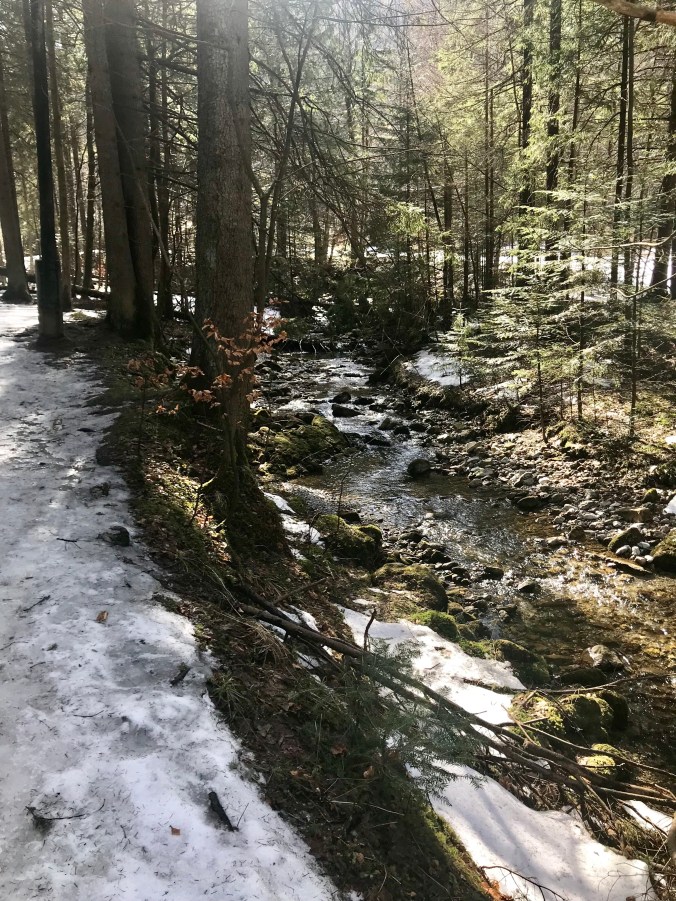
The weather has been problematic, cloudy with breakthrough sun and variable misty rain. I hiked along a trail later that day – a local favourite obviously as there were lots of people rugged up and strolling along the ice and snow strewn path. It was not enjoyable for me as although I had walking shoes, I was not stable and slipped and slid, especially when descending, so much so that a local lent me one of his walking poles.

This was the sign at the entrance to the hiking trail, I did have second thoughts.

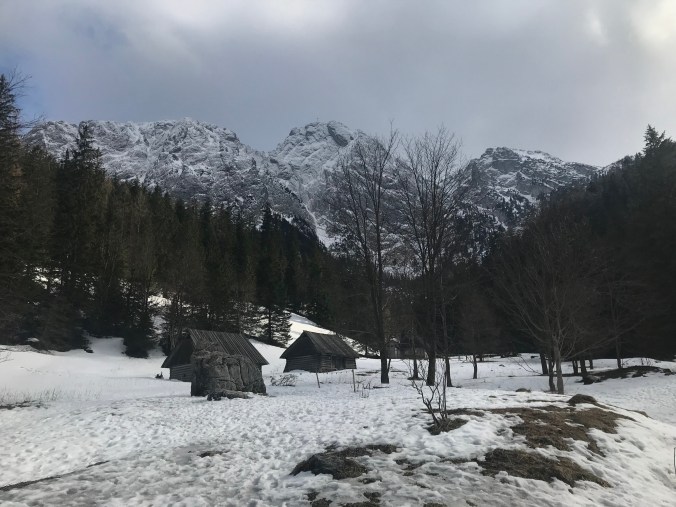
A couple of pictures of the scenery from the hiking trail
The second day, Easter Saturday I visited the 3 best ‘things to do’ in Zakopane according to TripAdvisor. The first was The Shrine of Our Lady of Fatima and as it was Easter, the place was seething.

There is a quaint custom that Polish people tend to fast on Good Friday or eat mainly fish then take a small basket of food to be blessed on the Saturday and once blessed, then that night and from then on, it’s the starter’s gun to indulge in gluttony: sweets, meat, meat and more meat. The Tata Chalet has a fixed dinner menu and then on Sunday there is a special Easter Breakfast. So I did venture in and out of the various churches if only to immerse myself in the Easter activities and the blessing of the food.

I also explored the Cmentarz Zasluzonycha na Peksowym Brzyzku (I can only assume there is no such thing as a low score in a game of Scrabble in Poland). It’s the local cemetery but as over the past few centuries, this mountain village has been the natural home of many Polish artists: painters,sculptors, writers, poets,philosophers and musicians, so the graves and headstones reflect the artistic talents of those interred. There were several musicians, but as far as I could deduce not an obvious Baroque Recorder player.

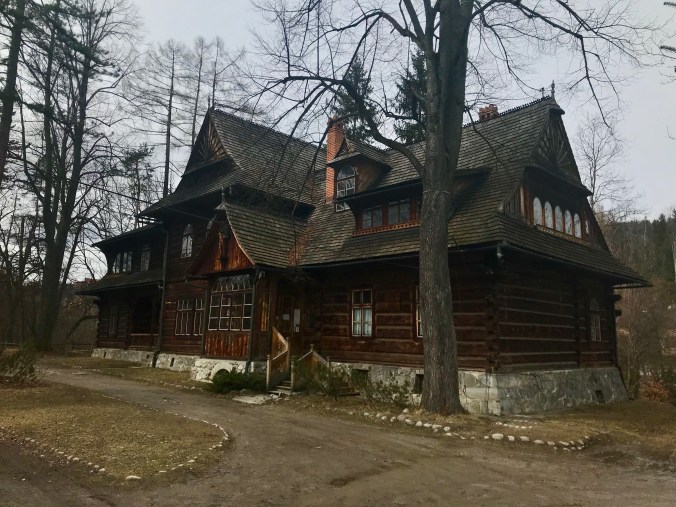
I also wanted to visit the Willa Koliba – a beautiful wooden villa designed by the famous architect Stanislaw Witkiewicz. It was closed but some pictures of the building reveal the detail and structure of what I can only surmise is the world’s biggest example of ‘tongue and groove’ technique? The building is situated along the original Main Street and all along this thoroughfare are beautiful examples of these wooden villas.
I then took the cable car up to the summit of Gubalowka mountain. Incidentally I discovered that the Polish way to say “return” as in “I wish to purchase a return ticket , please” is “up-down”. If only I had known that before. At the summit is a tourist Mecca of food and souvenir stalls.

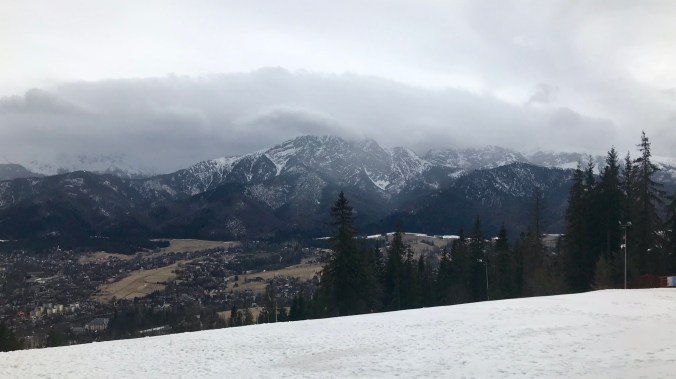
The view from the summit
Overall a 20km walking day. I had a sauna upon my return. This is the Tatra chalet

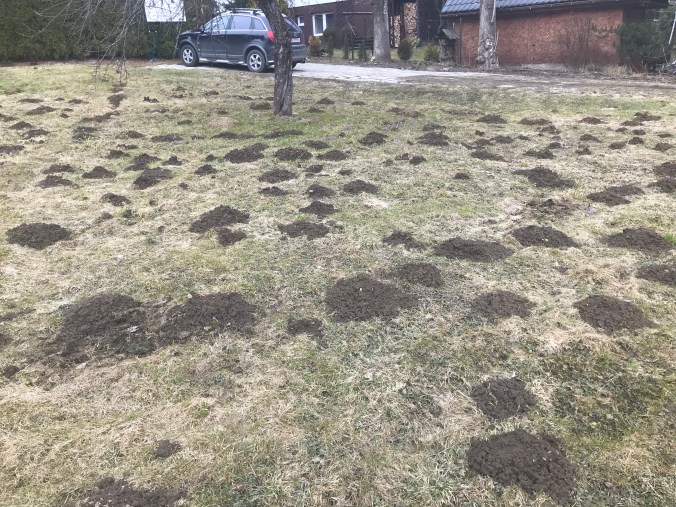
And finally should we have moles in Australia ( not in the Russian embassy) but the Wind in the Willows type, then this how my back lawn might look.
A Food interlude

It is now common knowledge that food is by far the most frequent subject snapped on the iPhone.

Here is a snap of a dozen Crispy Kreme donuts”…. which can be blown up to be a feature on the kitchen wall as my iPhone has a resolution of a zillion pixels/mm.

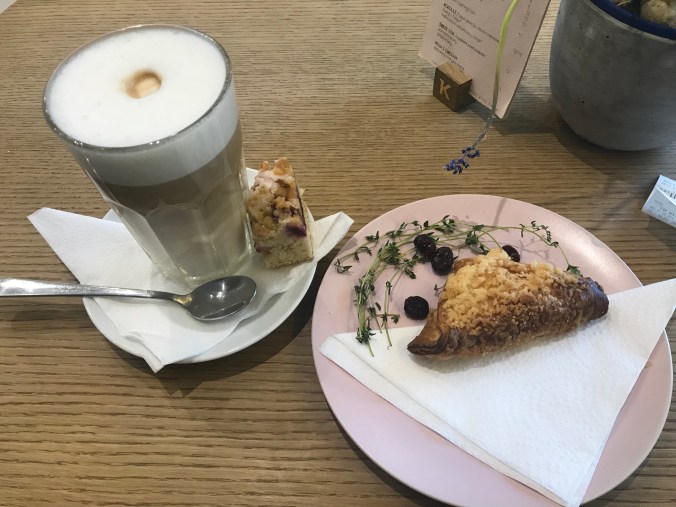
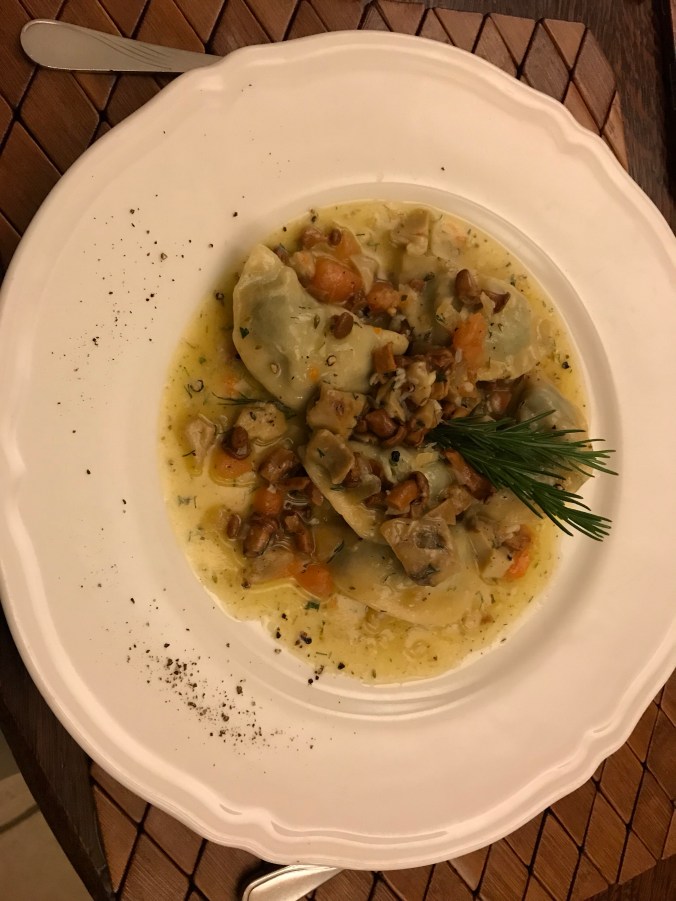
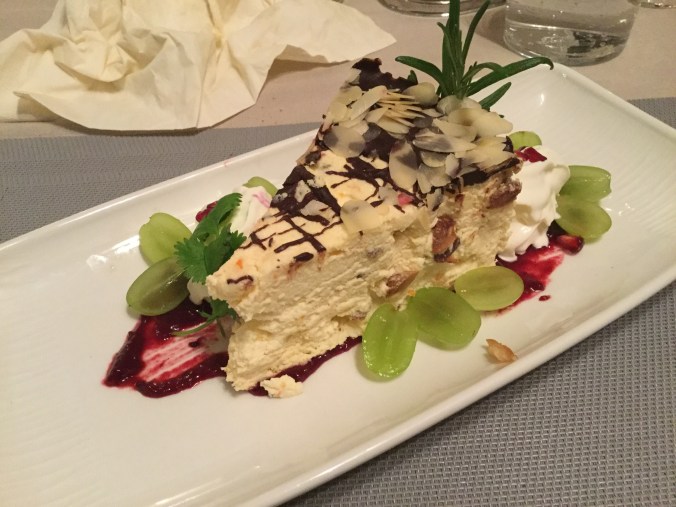
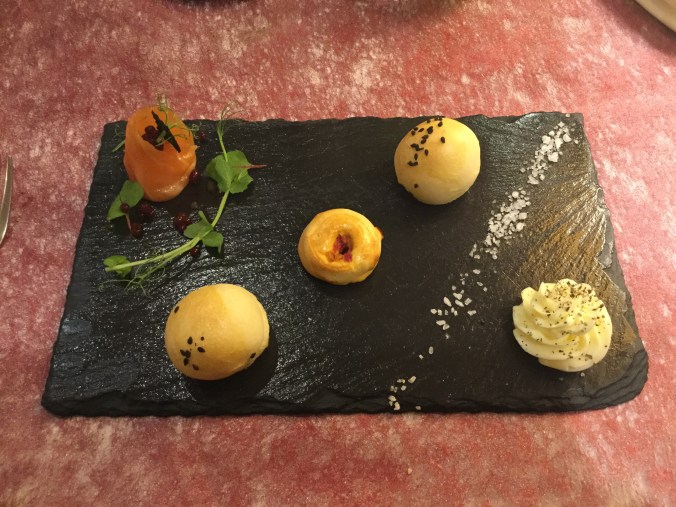
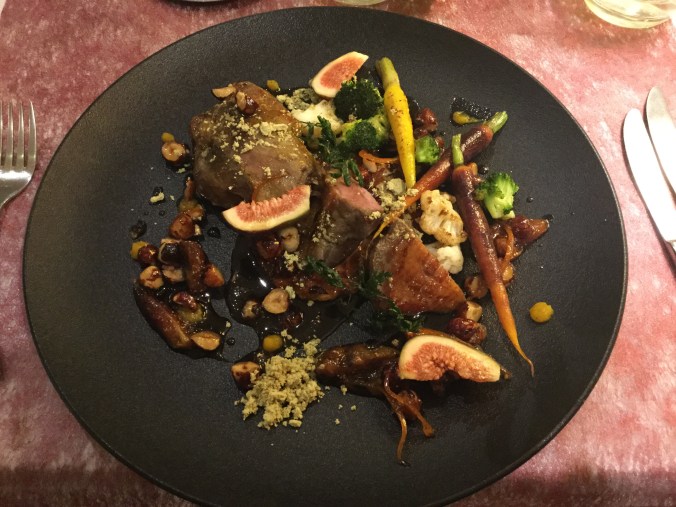
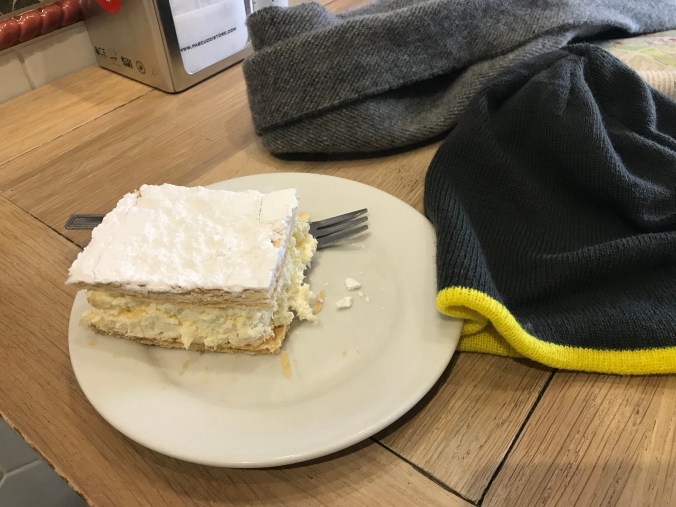
Anyway here are the inevitable. Dumplings feature twice and the two with meat are in fact duck. The last is an Easter special called “The Pope’s Cream cake”.
Krakow Day 2

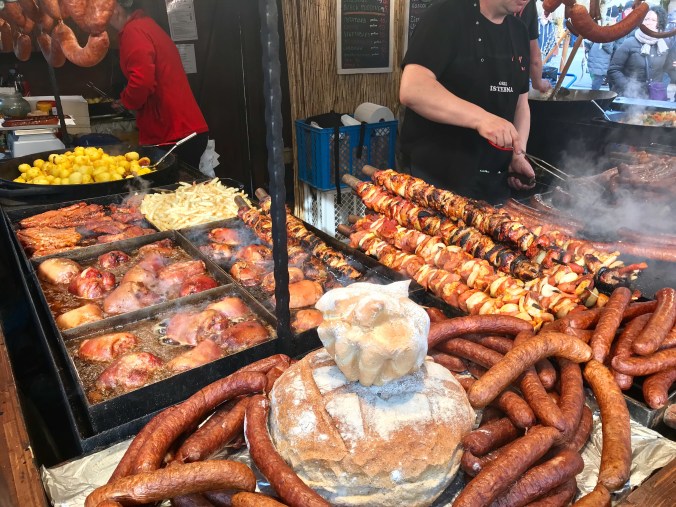
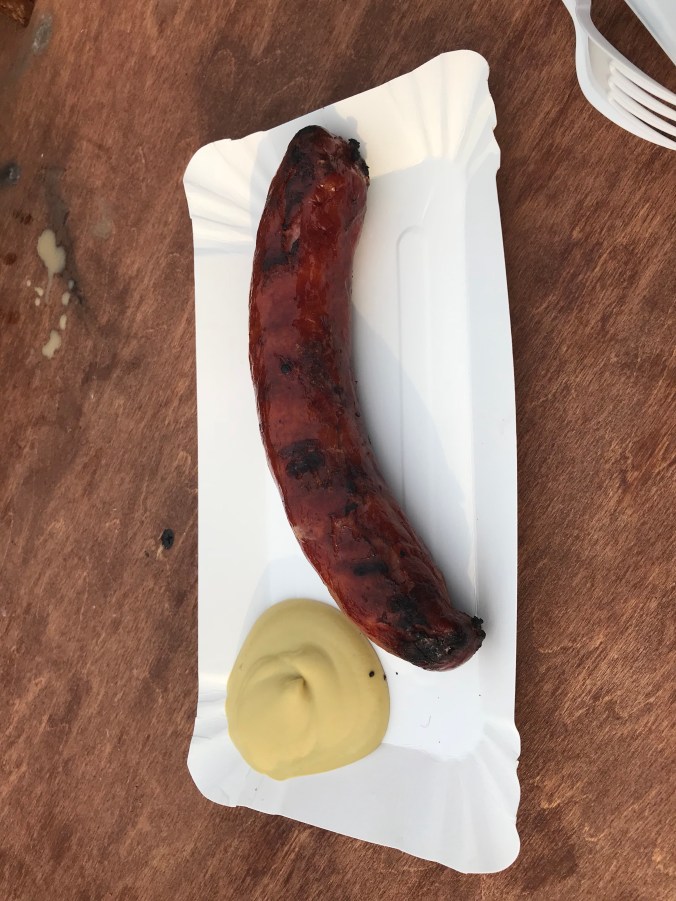
There is a delightful old town walk that I did, so far my Apple fitness app calculates 15 km walking a day on average this past week, so guilt ridden as I am by nature, I feel justified in consuming a daily Ice-cream AND a large Polish sausage. The Polish sausage comes with the lot, mustard, bread and makes a Bunnings offering, positively miserly.

I hasten to explain that these two seemingly mutually exclusive taste sensations, are not partaken in parallel but rather sequentially, some days it’s ice cream first then sausage and on their days it’s the reverse. After much deliberation, I trend to favour something hot in my mouth first then follow with something cold.

The walk is well set out and each point of interest fully explained in perfect English. There is indeed so much to see, the main tours touted by all the numerous tour offices appears to be in this order

• Tour of Auschwitz Concentration Camp

• The Salt Mines

• Schindler’s Factory ( thanks to Spielberg)

• Day trip to Zakopane.

• The Old Jewish Quarter

Then there are of course the various organised tours of the Old town which one can do by one self or if one has the urge

• A horse and Surry – even with a fringe

• Small golf buggy type contraptions

• Bicycle

• Segway – although thankfully not too many of these were obvious, as far as I am concerned they are dangerous and a lazy option.

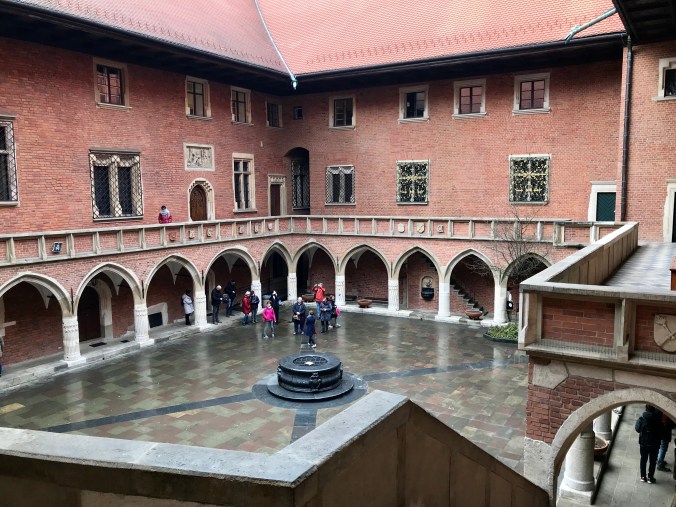
Whilst the Wawel Castle and Cathedral sitting atop a hill ( as ALL European Palaces and castles are invariably situated) was fascinating to explore from the outside and to meander through the gardens and square, I elected to forgo the cost of a ticket to visit the Royal Private apartments, armoury and exhibits of their priceless treasures. I was quite frankly rather ‘over’ looking in awe at the royal bedroom and bed, even with a seniors reduction in price. Instead I chose to visit the oldest university in Poland – the Jagiellonian University founded in 1364. At its inception there were three faculties: philosophy, medicine and law. The oldest building still standing is the Collegium Maius. The inevitable regular fires over the centuries and of course additions have changed it somewhat but the tour that I took visited several of the original rooms: The library, The common room and the “Aula” – sort of like a Great Hall of our modern university, where special university events are held and the seats occupied by members of the University Senate.

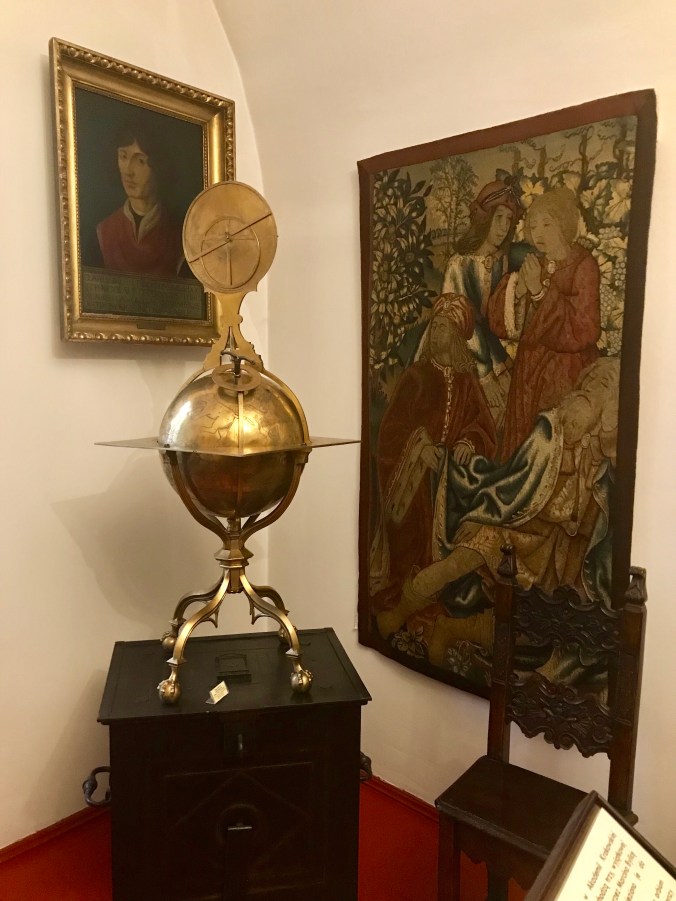
The singular claim to fame of this university was that Copernicus enrolled there as a lad of about 18 from 1491-1495 , which if my poetic memory is correct is during the time that “ Columbus sailed the ocean blue…”. There was a bequest of a certain Professor leaving 3 unique astronomical instruments, used by Copernicus, including a celestial globe, an astrolabe and a torquetum- what ever that may be? Any gifted science teachers who can enlighten me?

After that I took a taxi to the Polish Aviation Museum, the subject of the previous blog

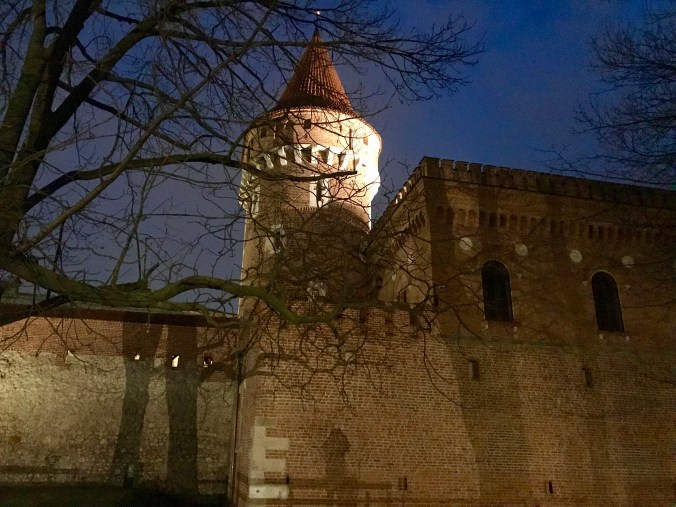
This picture is part of the original medieval wall around the old down of Krakow:

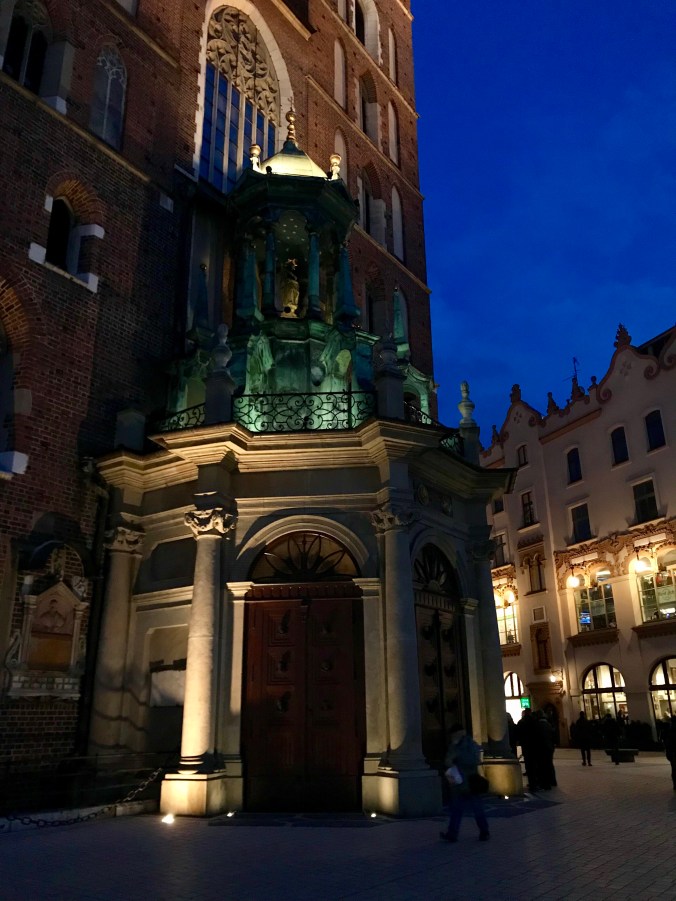
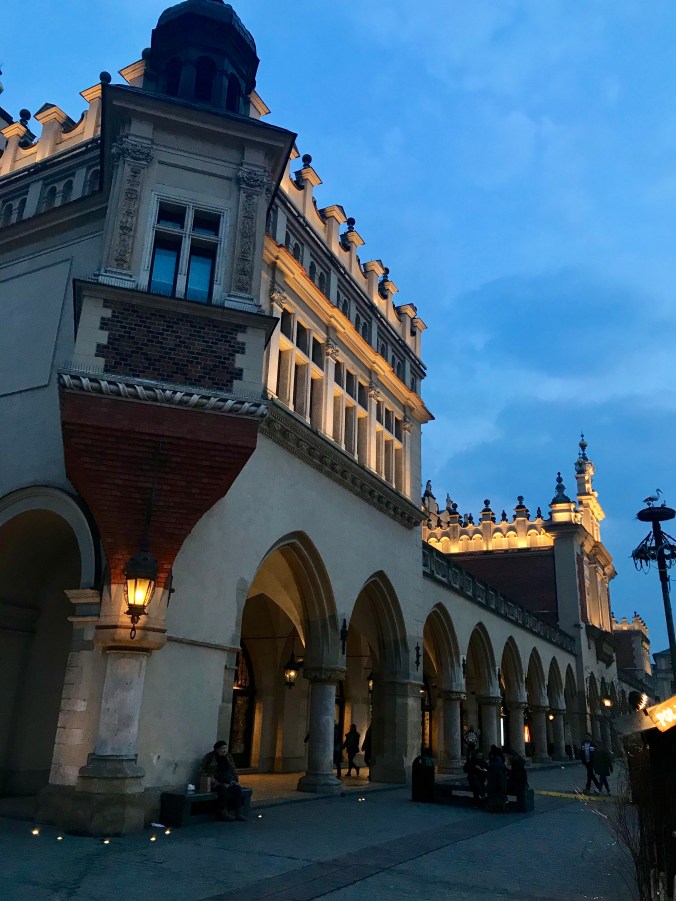
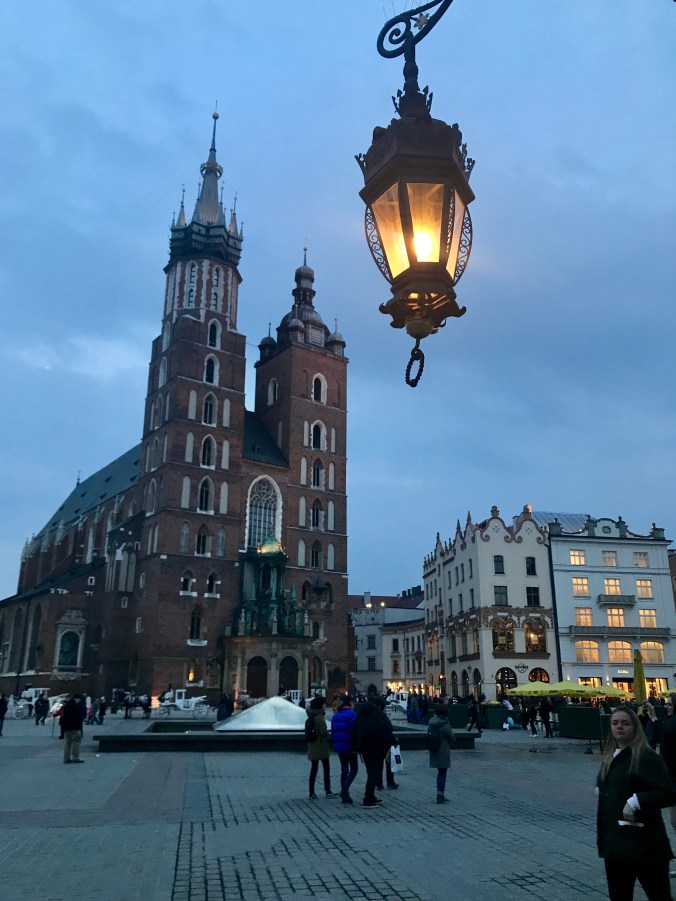
Several photos of the huge town square (the largest in Europe it is boasted) at dusk


this long beautiful building sits in the middle of the square and is called the Cloth Market – now it sells trinkets, cheap jewellery – what would be described euphemistically as “bric-a-brac”

Now to the Jagiellonian University Museum in the Collegium Maius

The Library:

The Dinning Room:

The large Porcelain cylinder in the top left corneris a heater. The overall feel was a little similar to the dining room and refectories at University and the various colleges – such as St Paul’s , which I attended. It is of interest that two former Australian Prime Ministers attended St Paul’s : Gough Whitlam and William (Billy) McMahon. I grew up and followed Whitlam at least in the political sense although some may say I followed Billy McMahon in another sense, and I do not refer to my large adolescent ears. It was said he had the appearance of a Volkswagen with both doors open.

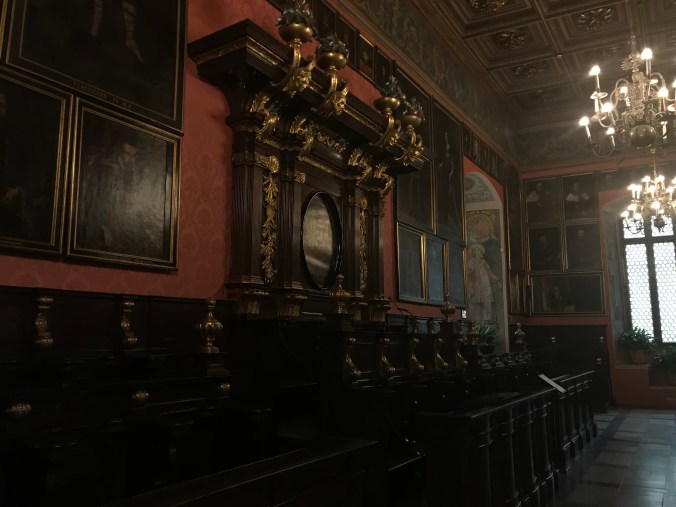
The university senate meeting room:

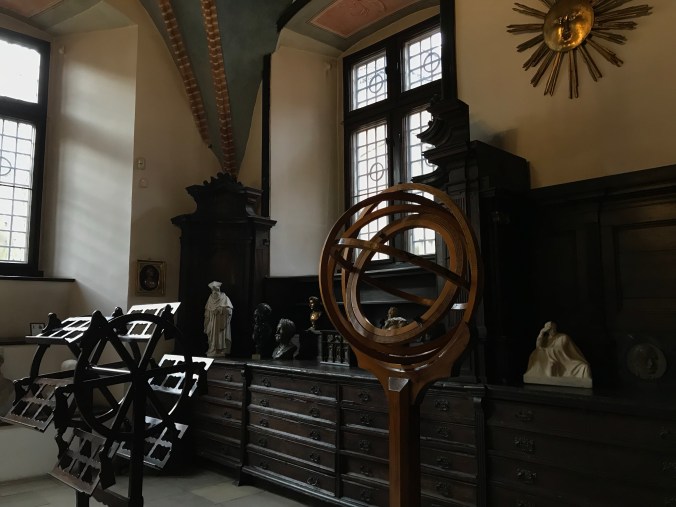
Several of the original scientific instruments used by Copernicus

The quadrangle and cloisters:

One can picture Copernicus wandering around this very square and at night gazing up at the stars. In his day the academic staff and professors lived an almost monastic life each having a basic room which opened up to the cloisters. It’s a shame that we have abandoned some of these customs in the 21st century really.

The Polish National Aviation Museum – Kraków

This remarkable aviation museum deserves a blog of its own. The day started out rather wet and bleak, so there were a few options:

  1. A sauna and massage (naturally a genuine Thai full body with badger bristle mits)
  2. A day trip to the salt mines
  3. A visit to the aviation museum

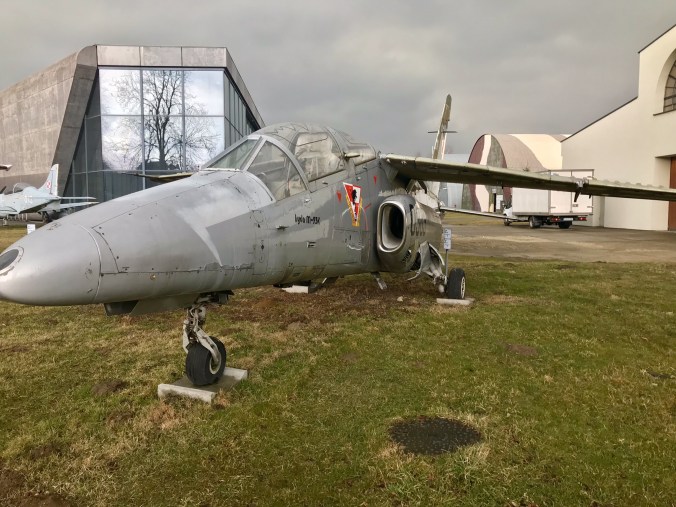
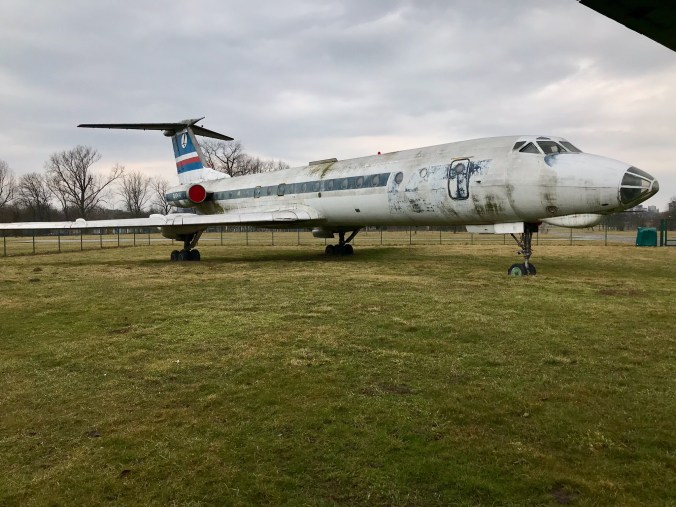
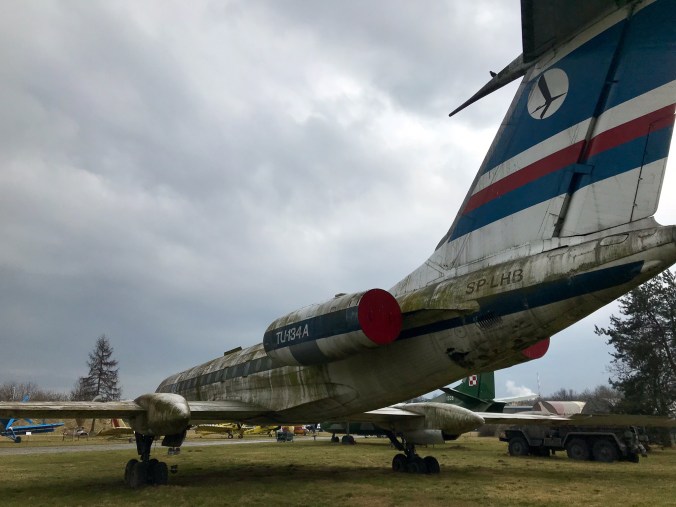
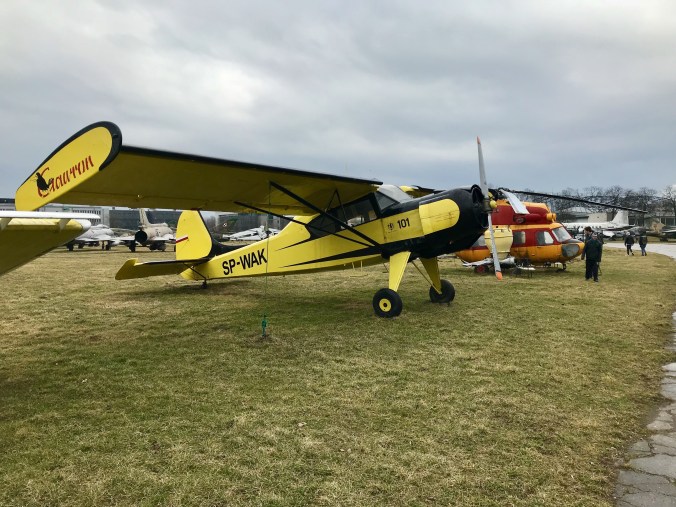
The aviation museum won hands down. It is based at an old airfield obviously and is a combination of new parts and well set out exhibits and then a vast field of aircraft of all ages and types rather haphazardly set out and many show the unfortunate consequences of being outside and exposed to the elements, which in Poland are at the extremes especially in the winter months.

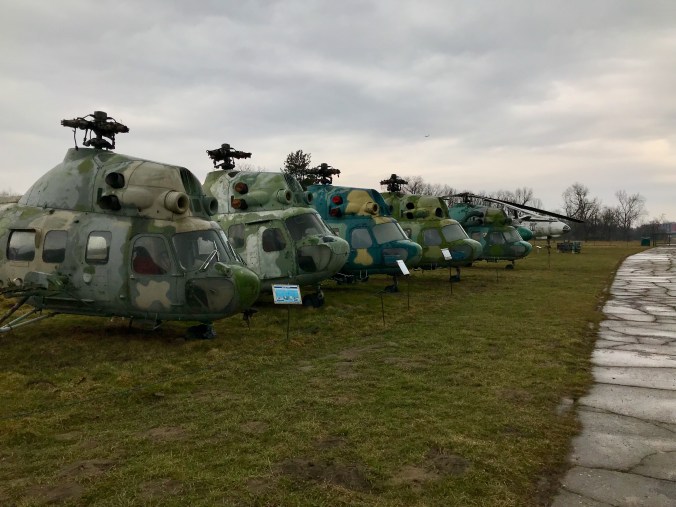
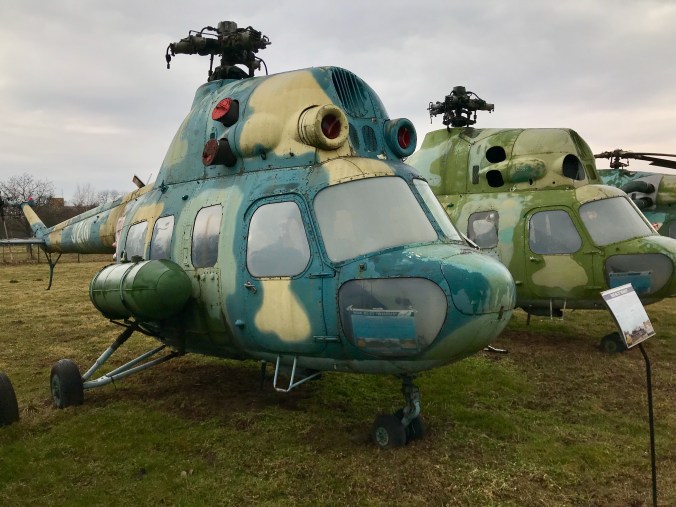
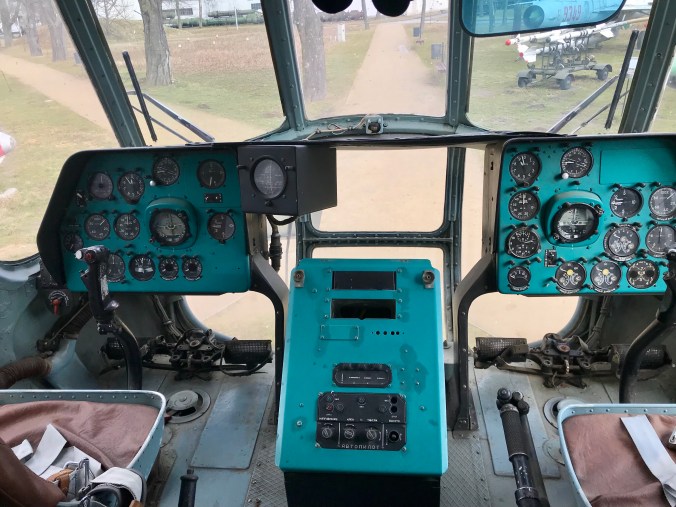
There was a row of helicopters ….quite a bizarre image , somewhat explicable when one realises the rotors are missing!

It almost looks like some sort of animal face?

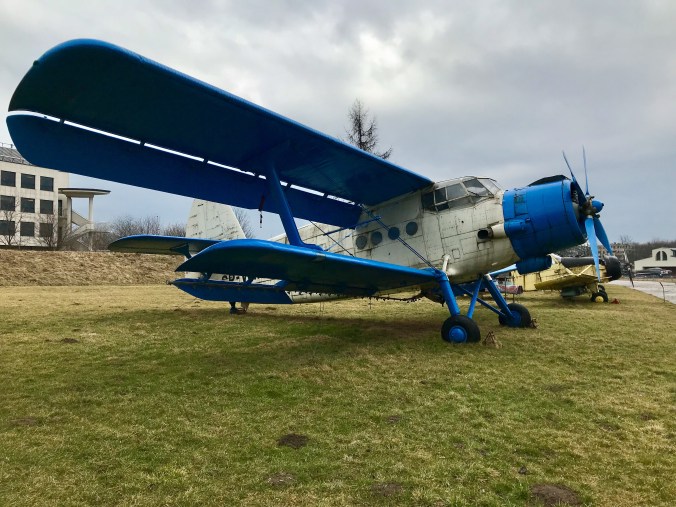
Then there was a fascinating row of agricultural aircraft, fixed wing, helicopter and even a prototype jet engine plane! A Russian design not surprisingly. It never took off -at least figuratively.

The agricultural jet aircraft prototype, all one can say is “WHY”?

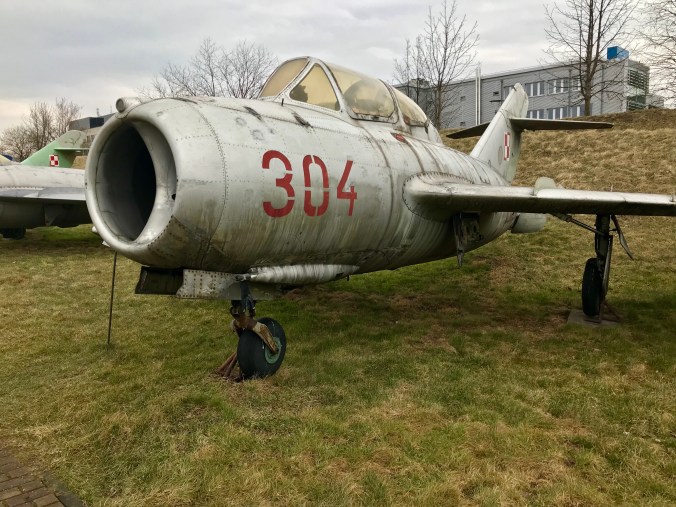
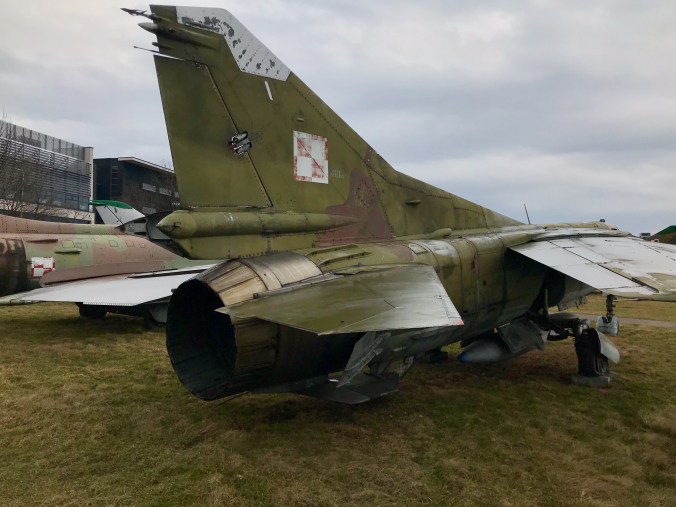
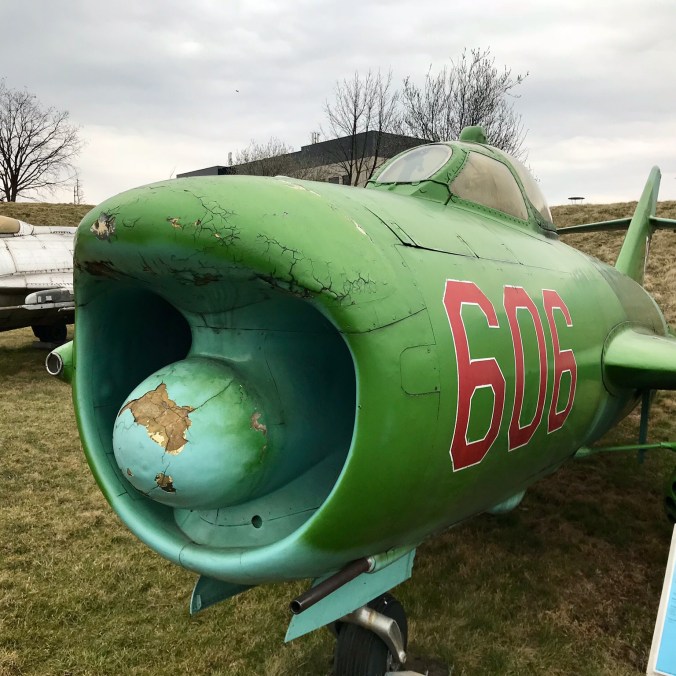
Then a few rows of various military jet aircraft mostly MIG understandably so, from the early post war period up to the late 1980s

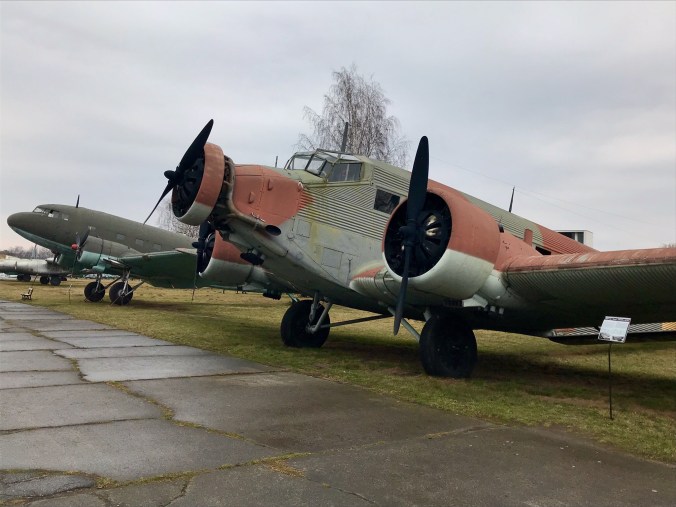
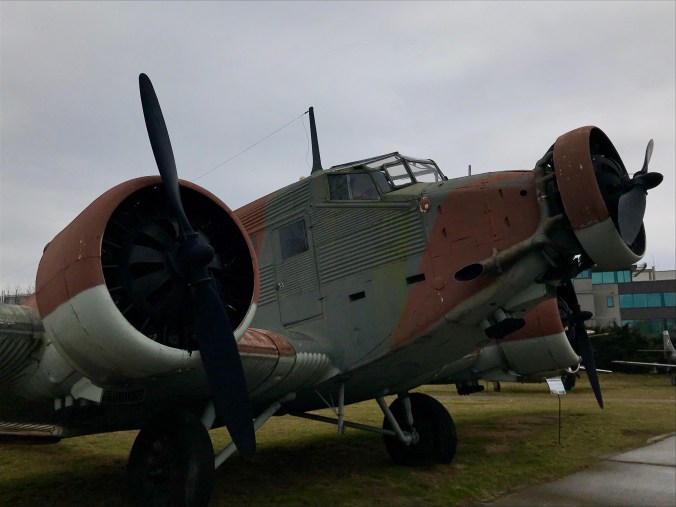
And finally some familiar and famous transport planes from WWII, German and British

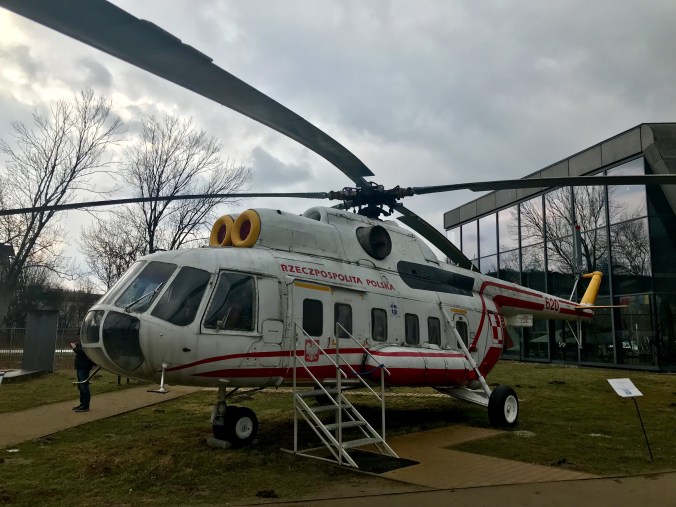
And the Polish museums’ unique claim to fame is this aircraft:

Can you hazard a guess? A hint perhaps- it was NEVER going to crash cause it had God on its side…here is the interior:

I shall reveal the answer in my next blog.

The Hotel Ilan

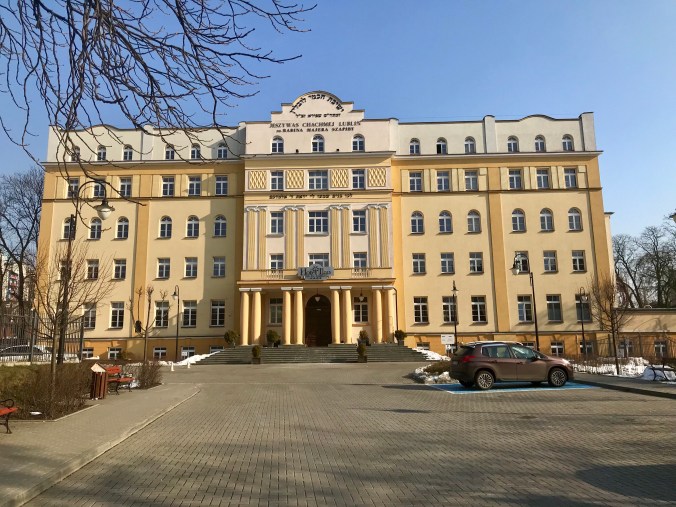
I have learned that Poland from the 15th century became home to the first Jewish settlers, particularly Lublin which region became known as “The Jerusalem of the Kingdom of Poland “, and was the leading centre of Judaic culture and religion. In the 1930s was established a world famous Jewish academy and rabbinical school – I am only guessing but I assume similar to a catholic seminary? It had a famous synagogue attached. Now it is a Jewish museum, a hotel and restaurant specialising in Jewish cuisine. The hotel is not a Hilton but is a rather poignant and slightly shabby establishment but nevertheless clean, friendly and it gets 4 stars from me…

Majdanek Museum and Memorial

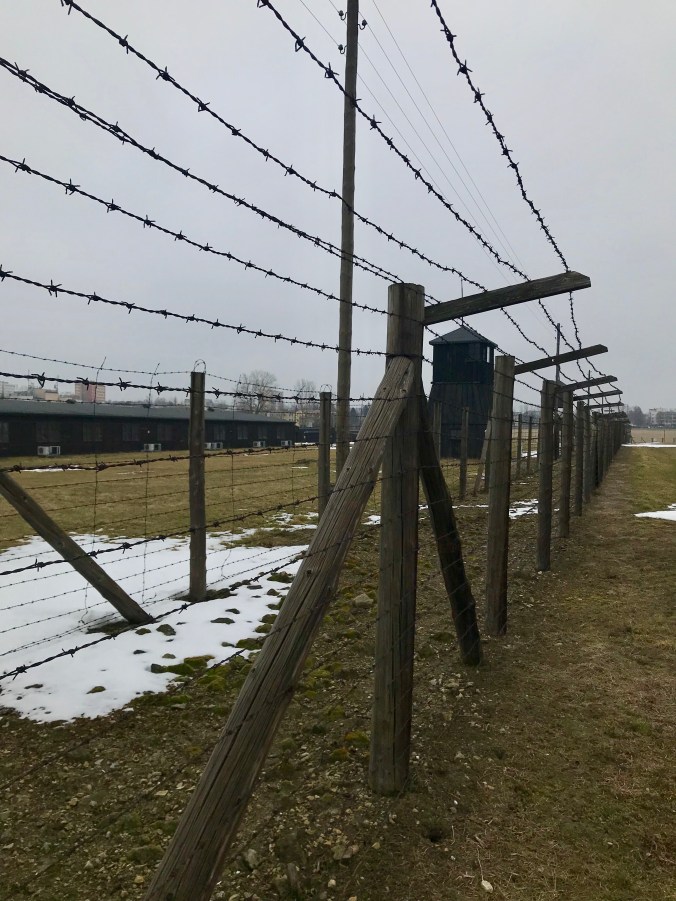
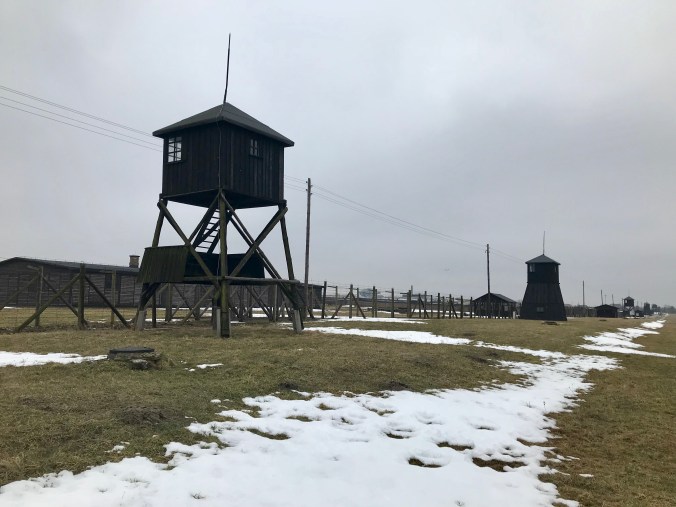
Having travelled by “private” Mercedes minibus to Zamosc yesterday , I woke to a dull wet day and for a few minutes, flecks of snow! I resorted to TripAdvisor for recommendations on things to do around Lublin that involved Museums. As it turned out the top site on the list was the Majdanek Memorial and Museum. The second most recommended thing to do in Lublin was to explore the local equivalent of the Westfield Shopping Complex. Truely! By the time I had showered and had a presumably Jewish breakfast, the rain and snow had stopped. The Majdanek Museum was in fact a former German Nazi concentration camp. It occupied an area of 270 hectares or 2.8 sq km! This was divided into 5 fields each containing 2 rows of prisoner huts and a middle open space between each double row for assembly, roll calls. Around the perimeter of electrified barb wire double fences were huts and barracks for workshops, the SS Guards not to mention the bathroom halls, gas Chambers and crematorium. It was ghastly in the extreme.

All I can say is that it was somber and sobering. I shall leave the few pictures I took tell the story of mans’ Inhumanity to man. I was numb physically from the freezing cold and mentally from disbelieve at the site and the it’s cruelty.

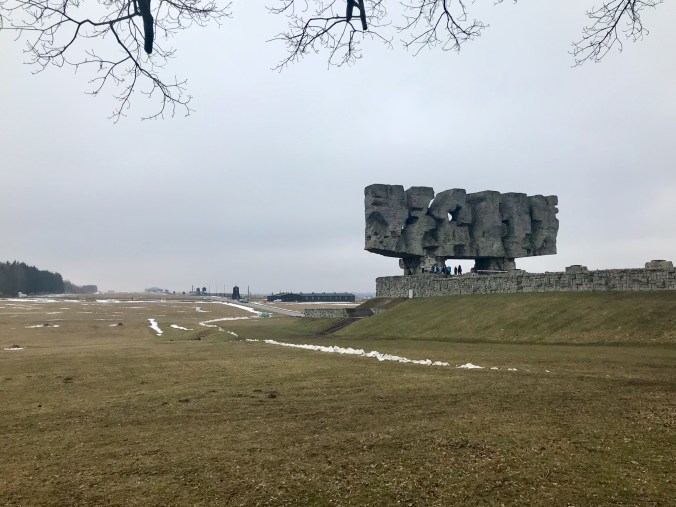
The entrance with its Monument Gate – marking the historical entrance to the original camp. The sculpture is a symbolic entrance alluding to Dante’s Gates of Hell.

From here there is a wide road – the Road of Homage, to an immense circular mausoleum under which is a huge mound of earth containing soil and ashes of many of the victims. It is set out somewhat along the same lines as the Anzac Parade from the War Memorial to Parliament House in Canberra. The circular mausoleum like a giant saucer can be seen in the distance.

Part of the bathroom washing sheds. Taps which feed rows of shower heads along the ceiling. The initial stream was icy cold followed by several seconds later, water at boiling temperature. Inmates were then “drenched ” by immersion in the cement tubs containing carbolic acid solution.

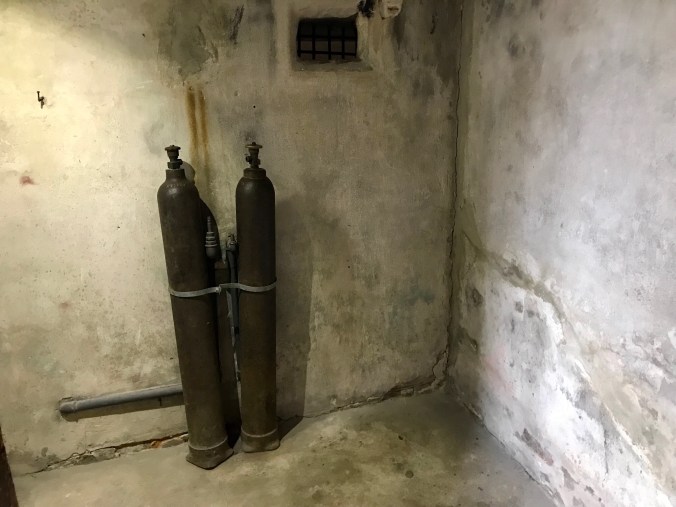
Gas cylinders that fed the poisonous fumes into the gas chamber. Note the small window and grill through which I presume the executioners could quickly check on their deadly progress.

A day trip to Zamosc

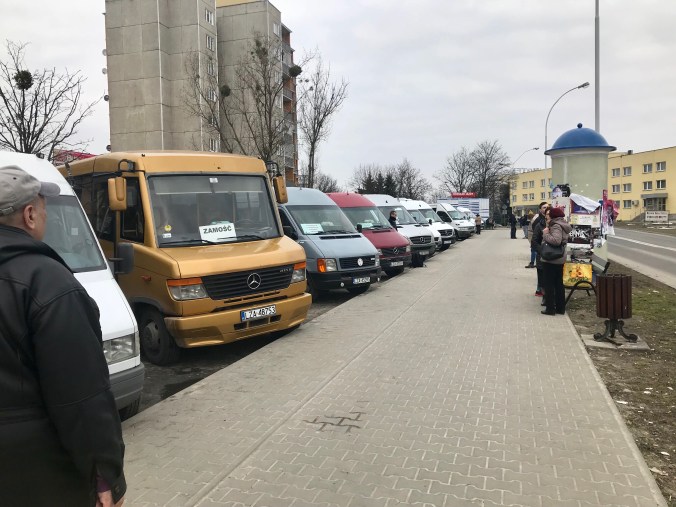
There are literally hundreds of “private”minibuses that crisscross Poland. They are invariably Mercedes vans and whilst this may seem impressive, they are all in various states of decay belching diesel fumes as they transport thousands of locals between towns and villages that dot the countryside. Such bus stations , seething with humanity and the fumes of diesel and tobacco, evoked memories of such bus stations all over Asia and the Indian subcontinent.

This is the minibus station in Zamosc much more sedate and civilised than Lublin

Having reconnoitred the evening before, discovering that the bus to Zamosc left from terminal 4 ( of which there are more than 26 bus terminals ( in reality a sign post) and rather impressively leaving every 20 minutes, I presented myself at 8:40 with the iPhone pre loaded with

Chciałbym kupić bilet powrotny do Zamościa..…thanks to Google translate –

One does not need a higher degree in language to pick up a word such as “Bilet” and “Zamosc” to have a reasonable stab at the intent. Sadly the driver looked at the screen intently in my hand , then took it himself , looked at it more closely, at this point I had a sense of profound déjà vue ( recall the Warsaw Railway Station ticket saga). He did not turn the phone upside down or back to front but simply stared at the screen as though mesmerised without a single word not even in Polish. Perhaps I had an illiterate bus driver? Had he never laid eyes on an iPhone before?

He eventually turned to the remaining passengers and after a brief discussion, a young woman came to the front of the bus, read the text and explained that I had completely stumped him by requesting a “return “ ticket! To Zamosc it’s one way or nothing. If truth be known the bus had a large sign on the windscreen stating ZAMOSC, so the simple act of getting on the bus would have indicated my intent and I could have handed him a 20 Zloty bill and paid without the need for the spoken word, unless of course I had persisted with my request for a return ticket. I fear he will go home after work tonight, get drunk on vodka or beat his wife or quite possibly, both and I will be to blame.

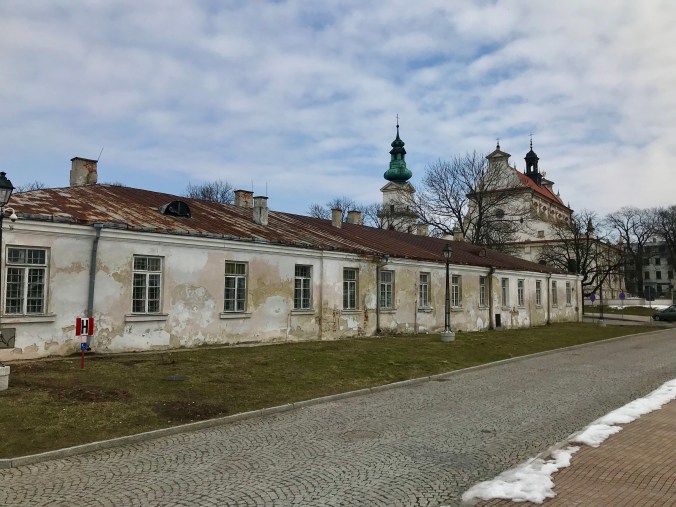
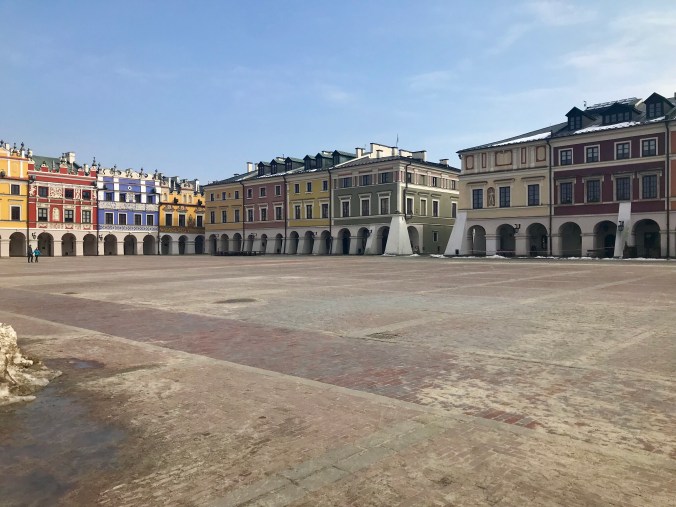
The medieval fortress town of Zamosc is justifiably a UNESCO World Heritage site. Surrounded by the inevitable walls, moat and bastions it managed to survive mostly intact until the invasion by Germans and Russians during the Second World War.

The 3 pictures above show the famous town square, devoid almost entirely of humanity at 10:30 am, a few Poles and certainly no Japanese. Not sure that Poland is on the bucket list for wealthy Chinese or Korean tourists. The town hall sits at one end of the square. The very colourful buildings that surround the square once belonged to wealthy Armenians ( not Americans!)

Whilst the old town occupies a few hectares, the rest of the vast metropolis is a bleak, depressing landscape of dull high rise appartments… the winter weather, the deciduous, dormant trees give a feeling, common so far in Poland , of an Eastern European country – which indeed it was until a few years aback

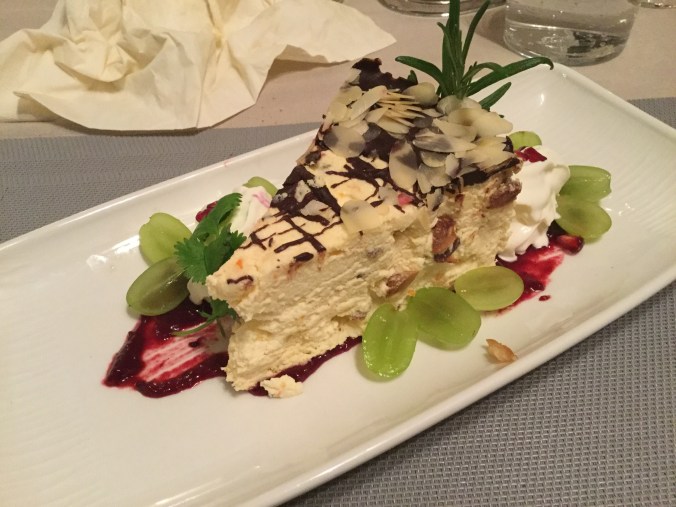
Finally tonight , having decided to forgo bread and wine for the rest of the trip, the waiter tempted me with a baked cheesecake. Not any old cheese cake but a typical Jewish Cheesecake..

why it is a Jewish I have no idea, but rather than pressure the waiter, I felt that it required circumspection on my part .

Lublin

I can honestly declare that I have appeared at sessions on all the 4 days of the conference. I have attended 3 of the series of Controversies in Neurology in the past few years and this was of reasonable standard, so much so that I don’t have any feelings of guilt with respect to claiming professional development expenses from my employee. The weather continues to be clear and sunny – but with stale snow on the ground from the last fall of the winter ( I hope). However as I am spending a few days in the southern port of the Poland in the mountain region of Zakopane, I may get to see fresh falling snow!

A 4 hour train journey from Warsaw to Lublin in a 1st class carriage that was reminiscent of the 6 to 8 seat cabins on the country trains in Australia during the 1950 and 60s.

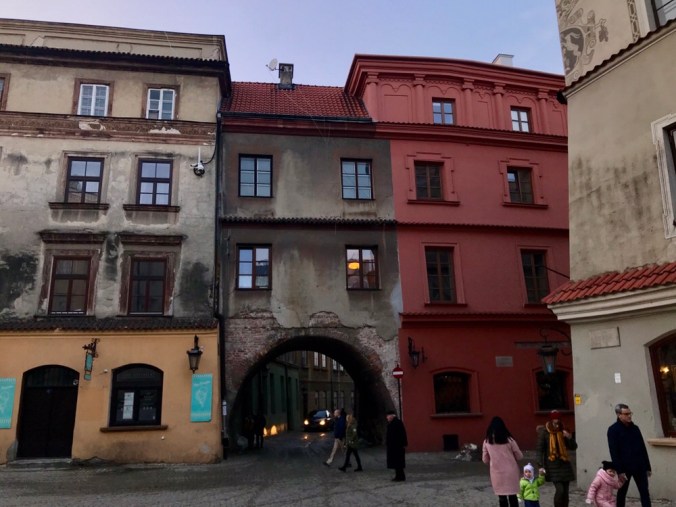
Lublin is a very large city with a very small ‘old town’ – it was all over in an hour or two and that included 20 minutes in the Dominican Cathedral.

But it had a nice feel to it. I was I think the only foreigner, the rest were local Poles or visitors who drove for a day trip from Warsaw. That is apparently what they do. I was fascinated by the number of locals who were carrying small ‘Posies” of dried flowers and leaves on a stick! They looked from a distance like colourful feather dusters. Intrigued, I asked the staff at the Tourist Office and we eventually came to the conclusion that these were part of Palm Sunday celebrations. This explained to me the large number of people quietly meditating in the Cathedral and an impressive queue of repentant Poles waiting to kneel and confess. About the only day in the Christian calendar that gets me vaguely excited is Pancake Day. The queue was only surpassed in length by a line which snaked around the block and across several footpaths, in the village square which was, I discovered, leading to the Icecream shop! Here was I rugged up in down jacket, gloves and beanie (new) breathing frost from both nostrils, to be confronted by literally hundreds of Poles patiently waiting for an ICECREAM! Yes I did relent and had one too – coffee/orange flavour and it was as tasty as it sounds.

.Incidentally I am staying at a rather quaint, musty Hotel that in its day was the centre of a thriving Jewish community I have a very large room and sitting room , warm and very quiet. It is the Hotel Ilan and it is within walking distance of the old town.

Tomorrow, weather permitting I shall take a local bus to Zamosc.
Warsaw in Spring

The organisers of the 12th Congress of Controversies in Neurology have devised a remarkable solution to ensure that I will attend every session of the opening day, which is being held in the Museum of the History of Polish Jews. Architecturally it is modern and well designed, located however in outer suburbia surrounded on all sides by drab, depressing high rise housing complexes with nary a shopping complex in sight. Our accommodation, the Hilton Hotel is more than 20 km away in the opposite direction, the same distance from the tourist old town and requiring a column of buses to transport more than 800 delegates across town in peak hour morning traffic , the journey taking about 28 minutes. Moreover to use public transport from hotel to the historic precinct requires change of bus, takes an hour, the other option is a breakneck taxi ride costing 50 Polish monopoly notes , about $20 which in the scheme of things is not going to upset my financial planner.

The presentations on this the first day have been like the curate’s egg. There is, hopefully a full day on epilepsy the day after tomorrow and the conference moves back to the Hilton hotel, which I trust you recall is a little more than 16 km from the city centre.

Today, Thursday promised “snow showers” in the morning clearing to a crippling biting breeze. There is no way one could cycle in this weather, even if there were safe dedicated cycle tracks (and there were quite a few) as ones’ hands and fingers would be frozen in a clenched fist around the handlebars. For the same reason, it has been nigh impossible to undertake photography of the outside scenes.

It is both disconcerting and yet absolutely fascinating to realise that most cities in Europe were subjected to such carnage and destruction during WWII, that palaces and cathedrals I now explore and wonder at , have been meticulously restored or rather recreated /reproduced ( not even the walls remained untouched). No where was this more evident than Warsaw, Dresden and as I learned last July, St Petersburg. So buildings that were centuries old, ravaged by recurrent fire and the odd cannonball , managed to keeping standing, at least the bricks and mortar, until in the space of 5 years, the Germans, Russians and British (both sides are to blame for these atrocities), razed the cities to the ground. What is just as impressive, if not more so, is that out of this anguish, economically gutted, these countries found the will, patience and resources to rebuild their history, starting even within a few years ofter the armistice and indeed continuing to this day.

There are few obvious tourists, not a single photo stick, nor even a huddle of oriental travellers. I have a deliciously politically incorrect image of a “huddle” of Japanese tourists, mimicking the behaviour of those huge colonies of Emperor Penguins, that squeeze into a seething, steaming catherine wheel, slowly rotating from outside to inside, during the blast of winter in the Antarctica. However it was not the Asian hordes that invaded museums, art galleries and cathedrals, but Polish school children. They were mostly of infants school age, walking along, rugged up and wearing their bright yellow reflective vests and with typical innocence holding hands with each other, or the occasional anxious boy holding the female teachers’, it was delightful to see and to appreciate that from an early age they are encouraged to learn about their heritage. They are also much easier to navigate past than a moving mass of “penguins”.

During my adventure holidays over the last several years, I have without fail, lost or misplaced items of clothing, cycle helmets, bike locks on a regular basis. Indeed it is inevitable that I will manage to lose either one sock or a single mitten (mostly the left hand) and the absolutely amazing thing is that I seem to misplace or dislodge one of a pair of things whilst actually wearing them……..Poland is no different and I have now lost in two days, both of the warm caps (beanies) that I carefully packed in anticipation of the weather.

Whilst waiting for the WARSAW train in Poznan, I felt like a Baguette and so I gazed at the selection and eventually pointed to the rack that contained the healthy cheese, tomato, lettuce. I pointed to the front where there were the multigrain, pumpkin seed baguettes. The assistant quick as a flash grabbed one of the baguettes closest to him wrapped it up and had it in the bag with paper serviette before I could say, ‘multigrain’! He had picked the white bread. My attempts to explain that I had chosen, indeed pointed obviously to the front of the display case, did not go down well! He leaned across the counter in a rather menacing way and it was at this very instant that I also realised he was about 6ft 6 inches and played front row for the ‘Warsaw Wringers’ – the local Rugby team and that he had ‘mother’ tattooed across the knuckles of his right hand. He then said as he clenched my baguette in his fist, ‘are you English’? I felt that if I said ‘No, Australian’ this may have provoked him further so I said ‘yes’. He then confirmed in reasonable English that I had indeed asked for a cheese baguette. He said that the paper bag contained a CHEESE baguette! Yes I agreed, trying to be assertive, but failing abjectly, by then noting that he had a skull and cross bones tattooed on his neck with the word ‘KILL’ where the teeth should have been. Mild mannered Clark Kent, by now was thinking of withdrawing, but at the same instance it flashed into his Neanderthal brain, that he was about to lose a sale, so he changed tack and admitted almost with a degree of guilt that the multigrain bread was in fact just white bread that became brown and ‘ healthy’; by the simple addition of molasses to the dough! I stood my ground and he relented. I must say the baguette consequently lost some of its tasty attraction.

Not sure what the moral of this story is? Perhaps it is that some seemingly straight Poles, can be bent?