A cool, crisp autumn morning past Norton Summit.
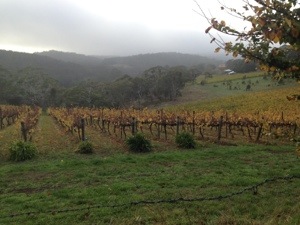
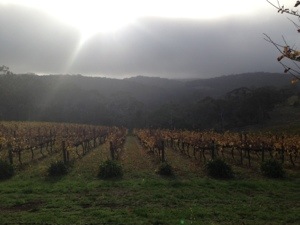
A cool, crisp autumn morning past Norton Summit.

Japanese tourists.
Having travelled around the world these past two years, I feel the desire to document my perceptions on the Japanese as a tourist animal. They are welcome to respond in kind. I admit that included in this rambling assumption may well be Korean travellers.
Firstly their politeness is legendary, unfortunately to the point of presenting at times as obsequious. They appear to apologize for merely being in your country at every passing, with an embarrassed curtesy. This reaches the nadir of neurotic posturing should you encounter a Japanese woman entering a public toilet as you are leaving.
Animal psychologists tell us that instinct drives your pet pooch to gobble up any and all food, as it does not know if and when it’s next meal will appear. So a Japanese woman will, like Pavlov’s dog, utilise every toilet stop on a bus trip, not knowing when or where the next stop will be. Mind you I do accept the observation that it may well be a female ‘thing’.
Given that they invented the digital camera, I am somewhat empathetic to their unique Hasselblad habits. Should they be fortunate enough to get close up, they will snap sparrows eating crumbs, a blowfly on a sheep’s back or a still-life of a minuscule moss growing on the branch of some vegetation, oblivious to the fact that it is an introduced (exotic) bush, the red berries of which contain a poison so potent that it makes curare appear innocuous. The other intriguing custom is to take a snap of a tourist site information sign. Now this is on reflection, understandable, not the least because I have been known to do it myself. For a foreign national such a picture could even be fed somehow into Google Translate. However I have been stumped on at least one occasion, when I witnessed a Japanese man photographing the road sign at a busy intersection in New Zealand.
They travel around the country in an apparent state of constant apprehension although as far as the woman are concerned, it’s more a look of fear, bordering at times on terror. My strong hunch is that they are only at peace with the world when they are eating Sushi with both feet firmly planted on the ground. As to the latter concern, why do they flock to Queenstown, billed as the Adventure Capital of NZ?
For it is here that the art of flinging the human body off Mother Earth at speeds close to a Saturn rocket, has been perfected. Do you prefer something on water perhaps? For a modest sum you can queue for “The Mission Ride”. Tightly tied to a floating wooden cross structure, you are launched into a raging torrent of white water and if all goes according to plan, plucked from the gates of hell, quicker than you can say ‘Jeremy Irons’.
But riding a cycle, that most innocuous of pastimes, that all of us learnt to do, a milestone acquired at the same time as starting to walk, is more of a millstone for the Japanese. I have yet to come across a Japanese woman mounted on a bike, who does not appear to be in a state of obvious fear. Her countenance says ‘please forgive me, this is the most unnatural thing I have ever done..’ And I believe her!

Plans well advanced for a month in europe – September. Fly to Frankfurt then train to Dresden and cycle !
Dresden – Prague – Salzburg – Vienna.
The Mozart trail…

He had a good life… no a GREAT life.
Untitled by graham3693 at Garmin Connect – Details.
No idea why this was HARD! Quads cramp at 60km… I needed a rest and coffee! Perhaps the colder ambient temperature reduced peripheral circualtion and so I did not clear LACTATE as efficiently? Sigh
My Desert Island Opera List
Let me state at the beginning, that I will try to avoid using the word “sublime” more than I should. It is impossible to describe in words one’s reaction and emotions to music – invariably classical . There is an intense, incredible shiver of ecstasy that envelopes the body and soul with these operatic miracles. They are not in any specific order and often I find I am in a ‘mood’ to listen to one aria and the next day to another. The one immutable fact is that these soaring songs must be played at volume levels that mimic the exact effect of the orchestra and singers, actually performing in my living room. I am an atheist but listening to these operatic pieces surely brings me as close to god as I ever will be.
I have a reasonable sound system for my CD collection. Actually I am of that generation that started out with vinyl and then in the 1980s, proceeded to simply duplicate my LP records in a CD collection.


My preference is for these Italian operatic composers: Verdi, Bellini and Donizetti. Most of us know or recognise the familiar tunes from these great operas. My favourites slowly grew on me once the familiar were ‘too familiar’. In all of them, it is the skilful, gifted way that the composer blends and weaves the human voice with the other instruments of the orchestra. In my chosen list, it is invariably a solo instrument that dances and adds counterpoint to the voice, there is no other word to describe this than ‘sublime’!
Guiseppe Verdi
Rigoletto
Cortogiano, vi razza dannar” – Act 2
This aria is the ultimate example of pathos. Rigoletto pleads with the members of the Duke’s court to return his daughter. She is, as Rigoletto sings, but a few metres away in the Duke’s bed, as is the Duke! This aria reaches its climax as he begs the courtiers to understand and there is a sublime ( first time I use the word) interplay between the baritone voice, cello and clarinet, soaring majestically together – “Miei signori…persona, pietate…” ( My lords, I beg you, have pity)
Ah, ch’io taccia! a me a lui perdonate…Act 2
A hymn sung by father and daughter as Gilda lies dying and finding peace by realising that in death she will join her mother in heaven.
La Traviata
The arias of Germont, the father of Alfredo in Act 2 are my favourites.
Pura siccome un angelo
it may not be politically correct in the 21st century, but it is a rather conniving request that Violetta give up her defacto relationship with Germont’s son, Alfredo for the honesty and integrity of the family. Yes the woman is to blame for leading the man astray.
Di Provenza il mar, il suol
Having discovered that Violetta has returned to Paris and rejected Alfredo, his father, Germont, consoles his son and says basically she is only a woman forget her, your roots are more important ( no not THOSE roots!)
Pargi, o cara, noi lasceremo
Realising what a bastard he has been, Alfredo rushes back to Violetta and begs forgiveness, and says he will make everything legal and then he will take Violetta to Paris for a real honeymoon. Sadly Violetta has pulmonary tuberculosis and belts out one last aria as she coughs and splutters to death and at the same time, presumably transmitting the TB bacillus to Alfredo and Germont.
Bellini
La Sonnambula
I admit that if tortured (listening to an Andrew Lloyd Weber CD ) to make a decision about my all time favourite opera, then La Sonnambula is it! I am in illustrious company as I recall that I read somewhere that it is Richard Bonynge’s favourite too!
Whilst “Prendi: l’anel ti dono” is the top of the pops for this opera, my favourite arias are
Cielo. al mio sposo io giuro
Amina is sleepwalking as she sings of her love for Elvino and is dreaming of being at the altar and swearing her marriage vows. Till death us do part. Happily this is ONE opera where the ending is happy and Amina does not die in tragic circumstances.
Oh! se una volta sola rivederlo io potessi. Act 2
This is yet another operatic ‘mad scene’ but with a variation as Amina is sleepwalking, again! Elvino is to marry another girlfriend and Amina is beside herself.
I have not covered Donizetti yet….!
Some of my rare gems are to follow in the next blog
Amongst the beautifully maintained and restored churches, offices, houses and modern museums in Oreo Preto we stumbled across the restored “opera house and theatre”. This is not Sydney! It was rather a delightful “miniature” of the European opera houses but built in entirely in timber, no bricks, mortar or stone work, let alone marble. It had 2 tiers of dress circles and a ” royal box” at the back wall.
Osley and I both performed on the stage! I did a small song and dance routine- to rapturous applause.
We also visited an old underground gold mine. Descended on the old pulley/cable train.
On the second day in Oreo Preto we also walked, without a guide, in the local national park. Rather dry and very hot! A bit like a walk in the Flinders Ranges. We found a small waterfall and pool so had a “swim”. We did not get lost and obviously survived all the wildlife that Brazil could throw at us on the day!
The pousada (hotel) at which we stayed in Oreo Preto was a beautifully restored old Hotel 4 star and filled with antiques! No sarcastic comments please! We had a room which was basically in the attic almost! But not basic by any means!
These historical towns and villages were invariably built on the highest hill in the area, so the cobbled streets to some extent go up and down like a smaller layout of San Francisco!
Tiradentes is an even smaller village about 80 km further away from Oreo Preto and rather unusually is nestled on flat land but beneath a long soaring mountain ridge, which we climbed – as is our custom to date. That’s not to say that the locals managed to build a large church on a modest “incline”, within the village.
The ornate church housed the sole remaining organ of a renowned portuguese organ builder from the 18th century. By lucky coincidence there was an organ recital on Friday night so we went along! Varied programme of conventional western 16 and 17th organ music including of course J.S.Bach.
At Tiradentes we stayed at another great hotel. – Pousada Solar da Ponte. This was an abandoned, neglected and half completed mansion, stumbled upon by a dapper and friendly Englisman and his portuguese wife almost 40 years ago! They purchased it, financed it’s completion into a 4 star pousada! The owner, John, now in his 80 s was a chatty delightful host.
The mandatory walk of each village was our intention in Tiradente, to climb up and along the mountain ridge and down at the other end. John also recommended a guide, advice we chose to turn down, the only time we should have paid the miserable pittance for a guide! Basically we negotiated the way up and all along the ridge for a distance of perhaps 6 to 8 km. But buggered if we could find the way down at the other end! The light was fading, we had consumed our heated bananas and were down to the last few sips of water. So rather than waste time and effort to try and find the elusive way down, we backtracked. By this time I was covered in scratches and charcoal dust as there had been a recent bushfire. I was also rather sweaty and no doubt smelly! So I suspect I presented a rather wild and frightening visage to any passerby! The chance of a passerby seemed remote until like mountain goats, 3 young men in Nikes and shorts, bared chested and sweaty, nimbly run up the rock strewn cliffs from the direction that we had just unsuccessfully negotiated the path down!
I am not sure who was the most surprised by this meeting on the mount! Anyway they described how the path went down leaving us feel irritated, frustrated and stupid! Add this to our blood and sweat, no wonder tears were not easily suppressed. As we had by then almost reached the way we had ascended at the beginning and dusk was descending, we decided to not go back and find this invisible trail. Besides traveling down with 3 young men seemed safer! Sadly I at least had no chance of keeping up!
My time in Brazil and indeed this extended holiday is coming to an end ! A final blog may follow!
Before I briefly combine the blog of these two delightful villages, I shall document that eucalyptus trees were introduced into Brazil from Australia in 1910. They are now ubiquitous. I was fascinated to read that Brazil now has more eucalyptus trees under plantation than any other country, including Australia. They have so spread far and wide across the whole country worse than cane toads!
In fact whilst it is true that the delicate ecology of Australia has been severely compromised by introduced flora and fauna, our revenge on the rest of the world has been the eucalyptus tree. Not a continent has been spared other than the antarctic, I can’t remember if this is a continent? I failed Geography 1.
Driving on the open road is a little disconcerting as the along the side of the roads the general vegetation is basically gum trees. The outside temp has been around 30 degrees, so the overall feel is essentially “well bugger me I seem to be back in Australia”!
Oreo Preto and Tiradentes were thriving towns that grew up rapidly as a consequence of gold fever that saw thousands flock to the mountainous region. Oreo Preto became the capital of the region called Mineas Gerais. This town has made an honest attempt to restore and maintain the Portuguese traditions, cobbled streets and, as usual, the churches, of which there was one or even two, on any and all hilltops and the village squares.
The tourist office in Oreo Preto was ultramodern, up to the standard of the best in Australia. Many of the museums had also made an obvious effort to create uncluttered, simple well lit displays for the exhibits. Many had bilingual descriptions or provided a laminated leaflet in various languages.
Photography was not permitted at all, in any of the churches and most charged a modest entrance fee. Assuming this was going towards maintenance and restoration, I was not to complain.
As with the religious buildings along the spanish Camino: cathedrals, monasteries and hospices, those in Brazil attest to the millions of hours spent in construction as well as the financing from the gold mines.
The superb paintings on the walls and ceilings, on timber are remarkable, all the more so as they are “original”. Other than fading and some water damage and variable deterioration to the timber, I was looking at buildings with all their decorations, carvings, paintings, as they were 2 or 3 centuries ago! The neutrality of south America during various world and European wars meant that bombings, rape, pillage and plunder has left these buildings unscathed!
Have reread that last sentence and whilst I have no
Idea of how “rape” would cause a church to deteriorate, you get the general thrust of my literary license? Unless of course, rape of the Nuns in a Portuguese nunnery incurred the wrath of God, leading to thunder and lightening and the roof caving in?
On the second day we decided to do a hike in the nearby national park. When ever we asked about “walks” in the various regions, the local people firstly expressed surprise that we even contemplates such activities and secondly implied that danger lurked around every corner, behind every tree (jaguars, leopards and yellow fever carrying monkeys but a modest list of Brazilian wild life) and that the risk of becoming lost was almost a given. These dire warnings, we chose to ignore or explain that we were happy to sign whatever liability waiver they offered. Resigned to our unswerving desires, these officials sighed and said that if that was the case, a local guide was obligatory. It was never clear on the justification for a local guide – simple navigation or that big cats preferentially attacked and ate the indigenous population.
We turned down these recommendations, with thanks of course, but I do admit that in Tiradentes we should have accepted the offer for we did become mildly confused. Readers may have by now realized that the daily dose of disorientation, so irritatingly predictable in Spain and Irelamd, has not been part of the Brazilian experience. It’s not that Osley has a more accurate internal compass, rather that he can say “we are lost, can you tell us where Campinas is?” in fluent Portuguese!
 graham3693